Creating Lighting Accommodations for Guests with Photosensitivity

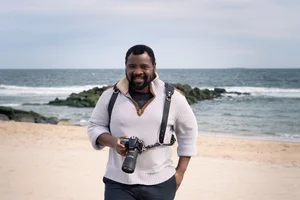
Image courtesy of Unsplash
Choosing a photographer is one of the most challenging aspects of planning a wedding. The right photographer can help make your day inclusive for all your guests, including those with photosensitivity. When you're considering hiring a photographer, here are some things to consider.
1. Communication is Key
When you're considering hiring a photographer, it's better to have the conversation upfront and let them know that some of your guests ' photos are sensitive. This is very important because bright and intense lights can cause pain and irritation. This will make your guests grimace and frown throughout your photos. More importantly, bright lights can aggravate certain medical conditions (e.g., seizure disorders, porphyria, etc.) and can cause problems for patients on certain medications (e.g., antibiotics and anti-inflammatory medications) as well.
It's generally better to avoid medical emergencies whenever possible. You can also consider informing your guests about the ceremony set-up and lighting plans with the photographer ahead of time so that they can make their own necessary adjustments. This is especially important if you're planning to have an outdoor ceremony in the early to mid-afternoon. Depending on where you are in the world, sunlight is brightest and most intense from around 11 AM to 4 PM. Usually, people with photo sensitivities already know how to manage their triggers, but they would be much better equipped if they had this kind of information ahead of time.

Using the light
This image was done in ambient light. The skylight helped to light one pocket of the room which was coincidentally next to the mirror. Having some of the light reflect off the mirror back to the couple helped to add some fill to the shot without needing to use flash. The groom working in film, so we added in a cinematic color grade in post-production.
2. Ask About Lighting Approach/Modification
Every photographer has a different lighting approach. It's often better to avoid harsh, direct lighting for photosensitive guests. Ambient/natural light photographers are often very good at doing this. However, lower ambient light levels can result in more grainy images if your photographer only shoots ambient light and your ceremony is later in the day. Grainy photos aren't necessarily bad. They can be a deliberate aesthetic choice that gives your images a more vintage feel.
Some photographers (especially those who use flash) use light modifiers, such as softboxes and diffusers. Flash photographers can often bounce the light off ceilings or walls to create a gentle and even lighting environment. I shot an event with several photosensitive guests, so one of the techniques we used was to point the lights more directly at the ceiling, which was painted black. This helped reduce the amount of light that was being reflected to the guests. When discussing your vision for your wedding day, asking about their lighting approach can be helpful.
For some photosensitive people, the flashing light itself may be the trigger. It can be helpful to discuss whether constant lighting from the venue or with lighting panels provided by the photographer may be a more appropriate option. Lighting panels are often larger in profile and therefore harder to remove in editing. Things move quickly during your wedding day, and certain critical/emotionally resonant moments may occur in places where the lighting isn't perfect or your photographer may find it difficult to edit out the light source. If you and your photographer decide to use constant lights, you must weigh the importance of having a picture-perfect, idealized image versus having the moment exist.
3. Consider Visiting the Venue
In some situations, it can be helpful to consider visiting the venue with your photographer and/or the venue manager. Alternatively, you can consider having the venue manager record a video of the typical settings of the house lighting at different points in the day. Some venues generally have lower/moody light settings, while others keep the room well-lit. This can help your photographer plan for the lighting scenarios they will most likely encounter. It also gives you a chance to discuss potential accommodations with the photographer and the venue ahead of time. Lastly, it may also inform how your photographer edits the final images. Creating the right lighting scenarios during the event is more beneficial for you and your photographer because it minimizes the amount of post-production work necessary to render your final images.
4. Offer Seating in Shaded Areas
Particularly for outdoor weddings, placing some seating options in areas with less direct light can be a great way to accommodate guests.
Sometimes areas that are slightly shaded with more even lighting can also be good for doing group shots or family portraits. This can help minimize having harsh shadows or blown highlights on some people's faces and not others.
5. Offer Lighted and Non-Lighted Times
Consider whether you want/need additional light for all aspects of your ceremony or reception. Setting up times when there will be additional lighting might also be an option. The caveat is that it may create extra work for your photographer when it comes to editing. Having specific segments that are clearly lit by flash/Supplemental light and others that are purely ambient increases the chances that your images will not have a consistent look throughout.
Having all of these accommodations is not always feasible or practical, but they are worth considering wherever possible. Prioritizing the well-being and comfort of your guests enhances the overall experience and ensures that everyone can fully participate in and enjoy the event.